Baby & Toddler Life With Your Dog
What changes once your baby is crawling, walking and reaching, and how we kept things calm, safe and fair for Buddy as Joy became mobile.

A new stage, with new boundaries to teach.
When Your Baby Starts Moving, Everything Changes
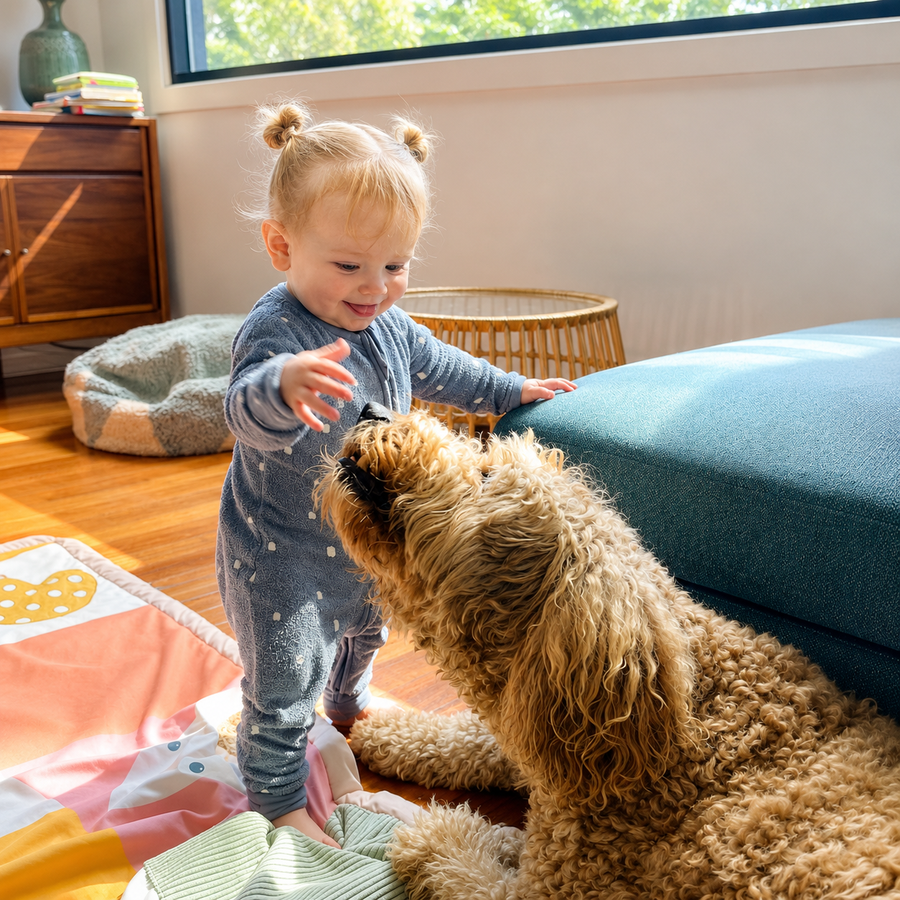
One thing that surprised me was that the mobile-baby stage brought a whole new set of challenges for Buddy.
A newborn mostly stays where you put them. A crawling toddler absolutely does not.
Suddenly, your child can follow the dog, reach the food bowl, grab fur and climb into the one space your dog thought belonged only to them.
“This is not about whether your dog is good with children. It is about teaching both of them how to share a home safely.”
This stage is where the boundaries change again, for both of them.
What Changes When They Start Moving
A crawling or walking child changes the geography of your home. Your dog's food bowl, bed, toys and favourite resting spot are no longer out of reach. Your child can follow the dog into corners and under furniture that used to be reliably theirs alone.
I realised quite quickly that this stage was not only about protecting Joy around Buddy. I also needed to protect Buddy's space from Joy. Managing both sides of that at once became the real work of this stage.
- Reaching, grabbing and climbing on the dog
- Following the dog into their bed or resting space
- Getting into food, water bowls or toys
- Sudden, unpredictable movement and noise the dog may not expect
RSPCA Australia notes that most incidents between dogs and young children happen during everyday interactions rather than dramatic ones, which is why ordinary moments like these deserve just as much attention as the big introductions did.
Gentle Hands Take Practice
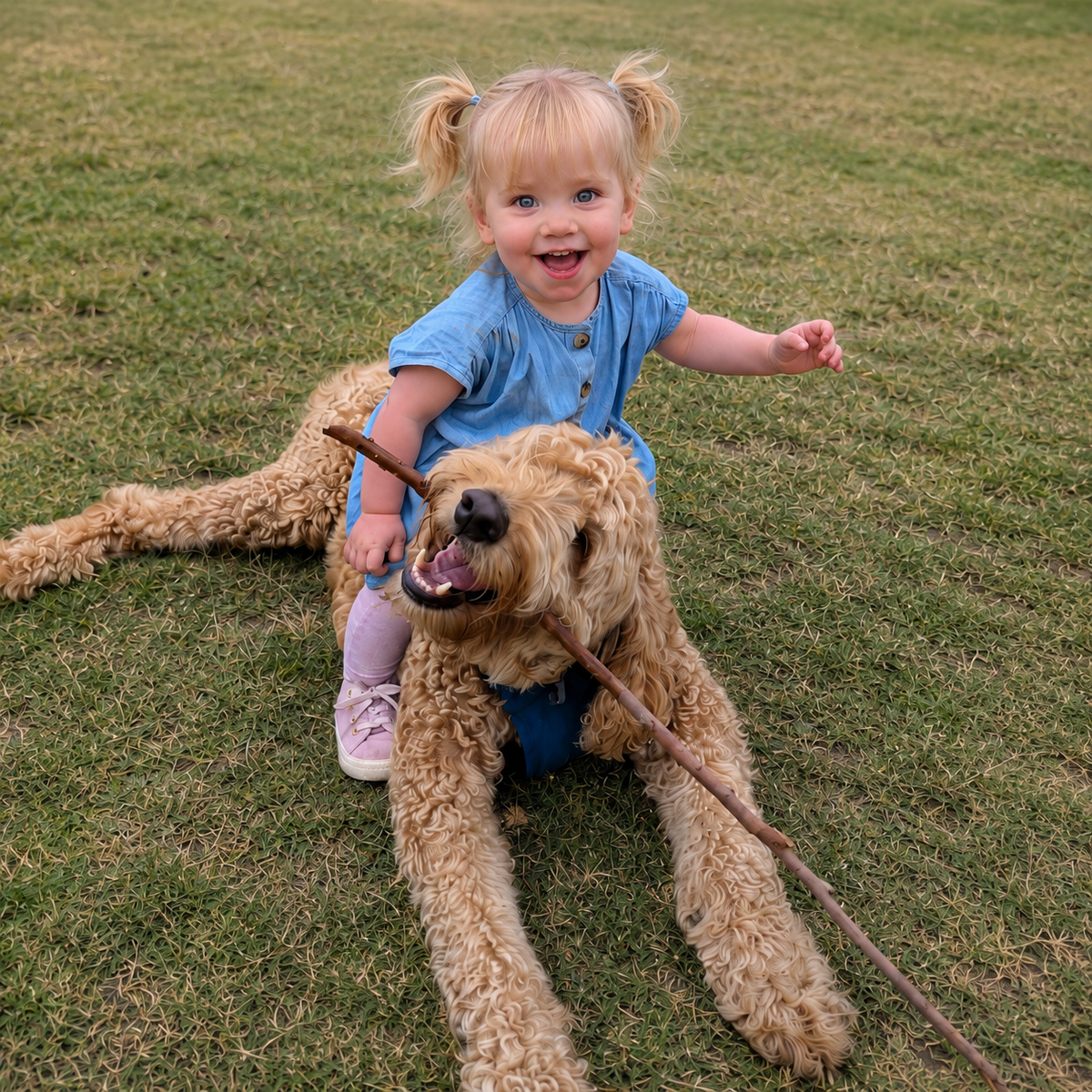
Joy grabbed Buddy's fur once with a grip I genuinely did not know a toddler could have. She was not trying to hurt him. She had absolutely no idea what she was doing.
That moment made the importance of protecting Buddy's space feel very real.
Grabbing is not deliberate cruelty. Toddlers explore with their hands, and a dog's fur, ears and tail are simply within reach. The goal is not to expect a toddler to understand this instinctively. It is to actively teach it.
We started teaching “gentle hands” as soon as Joy was old enough to begin understanding it. At this age it takes a lot of repetition because toddlers are still learning how much pressure they are using. It can help to practise outside of moments involving the dog at all, so the habit is already forming before it is tested. Guiding your child's hand into a slow stroke, narrating it softly, and separating them as soon as grabbing starts all made a difference for us.

Respect Their Distance and Protect Their Retreat
A dog who walks away from a toddler is communicating, not misbehaving.
When Buddy walks away, our job as the adults is to make sure Joy does not follow him. Over time, we can teach her that moving away means he wants a break.
- Let your dog leave the room or move away without being called back to the interaction
- If your dog is trying to create distance, let them, rather than holding or restraining them near your child
- Redirect your toddler instead of asking your dog to simply tolerate more
A Place Buddy Can Always Retreat To
Buddy has a space that belongs to him. If he goes there, Joy does not follow. The quiet space we set up before Joy arrived matters even more now that she can reach it. For us, that boundary is non-negotiable.
- Use a baby gate, crate with the door open, or a room your toddler cannot access unsupervised
- Teach your toddler that the dog’s bed and crate are not a play area, from as early as they can understand it
- Never place the retreat somewhere your toddler naturally passes through or gathers toys
Leave the Dog Alone When Eating, Sleeping or Enjoying Something Valuable
Food, sleep and high-value items such as chews or new toys are some of the most common triggers for a dog to react defensively, even a dog with a long history of being gentle. This is not a reflection of a “bad” dog. It is a normal canine response that active supervision is designed to prevent.
We do not allow Joy to approach Buddy while he is eating, sleeping or enjoying something valuable. At this age, that boundary is ours to manage rather than expecting her to remember it every time. It protects her at least as much as it protects him.
Family Paws Parent Education recommends feeding and giving high-value items to the dog in a separate, gated space during this stage, rather than relying on a toddler to remember not to approach.
Signs Your Dog Needs More Support
As your toddler becomes more mobile and more unpredictable, I found it helpful to learn some of the quieter signs that a dog may be finding things difficult.
- Increased avoidance of your toddler, including hiding or leaving the room preemptively
- Growling, stiffening or freezing when your toddler approaches
- Guarding food, toys or resting spots more than they used to
- General changes in appetite, sleep or tolerance for handling
If your dog growls, snaps or shows behaviour that worries you, create space and get professional help. A growl is information that the dog is uncomfortable. It is not something I would punish or expect a toddler to manage. Speaking with your veterinarian to rule out pain or illness, and engaging a suitably qualified reward-based behaviour professional, can help build a plan specific to your dog and your family.
Not Every Dog and Child Becomes Best Friends

It is tempting to want the picture-perfect version of this. Your dog curled protectively around your toddler. Your child announcing the dog as their best friend. For some families, some version of that does happen.
For many others, the honest outcome is smaller and just as valuable: a dog and a child who share a home calmly, who know the boundaries between them, and who are never left to work it out alone.
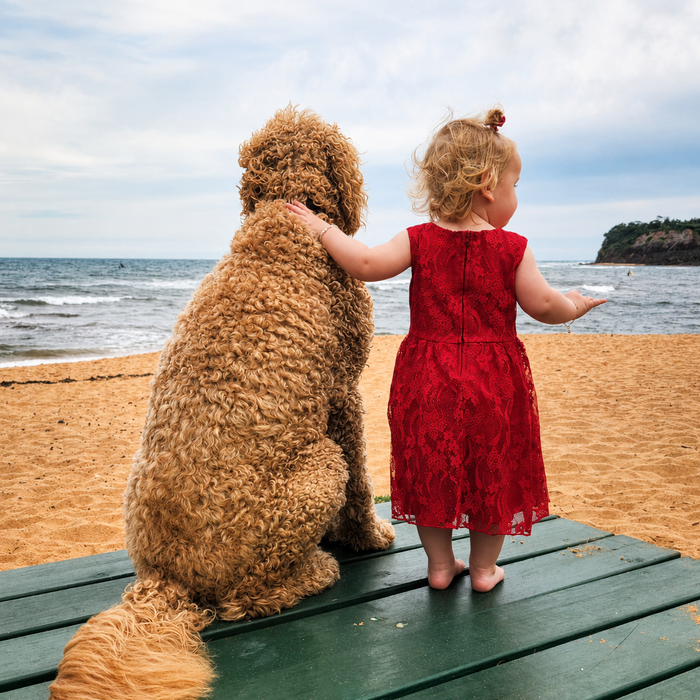
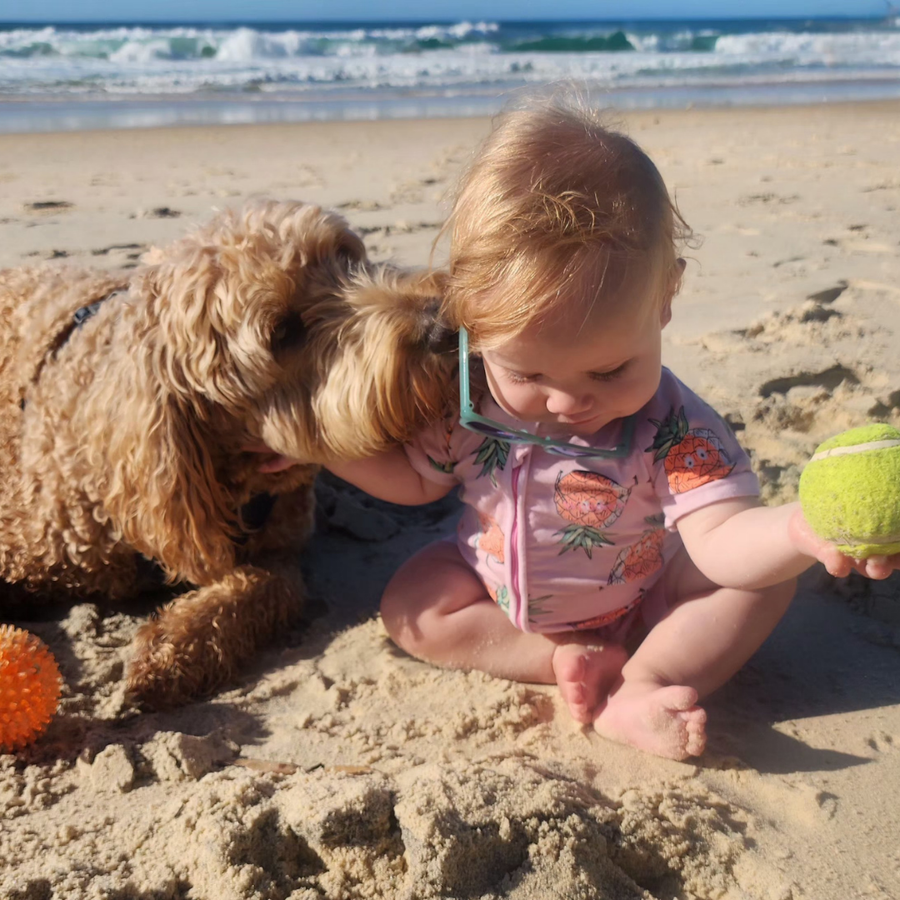
Buddy did not simply tolerate Joy. Over time, he became her devoted companion. Their relationship grew through lots of ordinary moments, clear boundaries and supervision. Every dog-child relationship will look different, and calm coexistence is already a good outcome.
“Calm coexistence is already a meaningful success.”
Family Outings With Both of Them
Walks look different again once your toddler is upright. There may be a scooter, a balance bike or small legs that want to walk part of the way themselves, all alongside a dog who still needs to be handled safely.
- Keep the dog’s lead with the adult who is not managing the toddler, wherever possible
- Practise loose-lead walking away from the extra distraction of a toddler first
- Choose quieter routes and times for the first few outings with everyone together
- Have a plan for what happens if your dog needs to be separated from a scooter, bike or pram mid-walk
None of this needs to be perfect from the first outing. It is worth practising the pieces separately before expecting them to work smoothly all together.
Built for Walks With a Toddler in Tow
The setup that helped us manage pram walks kept earning its place once Joy was upright and walking herself.
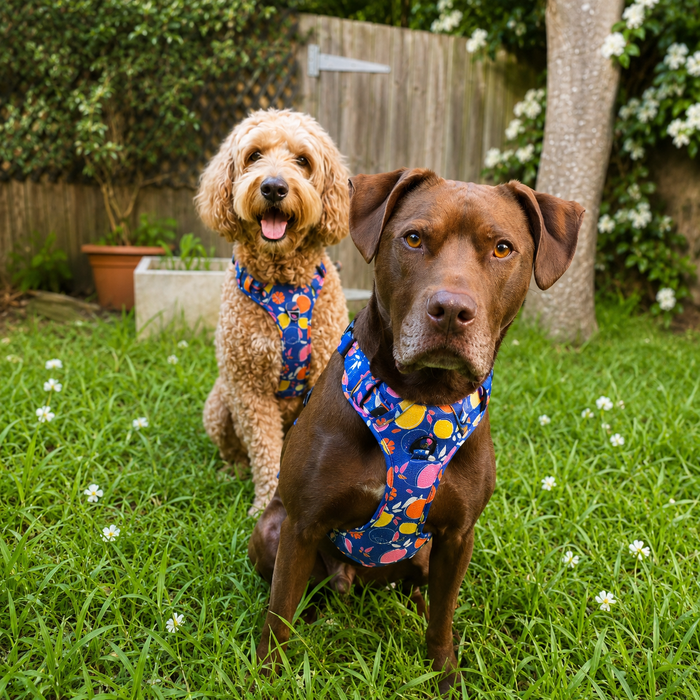
A front-clip, no-pull harness with a grab handle gives you a quick, calm way to steady Buddy if a scooter, bike or an excited toddler suddenly changes the pace of a walk. A hands-free lead means whoever is holding a small hand still has the other hand free.
No-Pull Dog Harness
- Front chest clip to help redirect pulling
- Back clip for everyday walks
- Reinforced grab handle for quick control
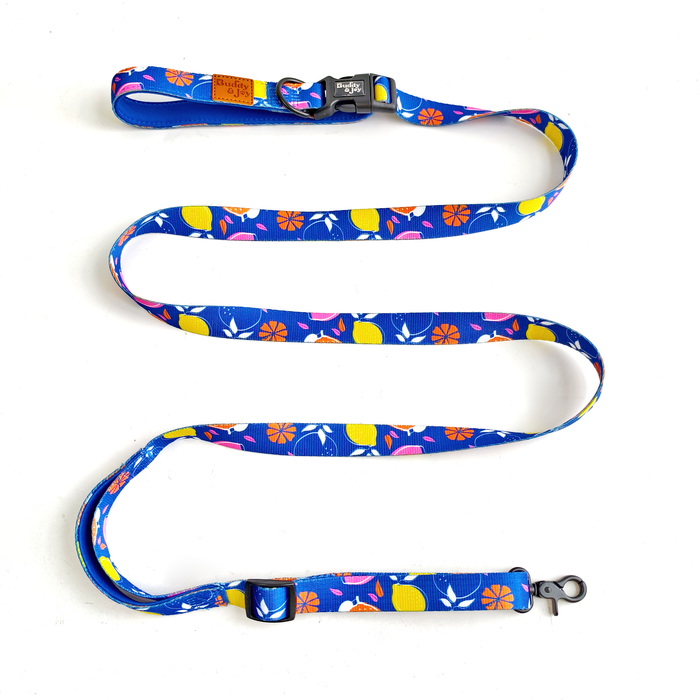
Multi-Wear Dog Lead
- Hands-free wear around the waist or across the body
- Adjustable for different walking setups
- Clickable parking buckle for quick stops

No-Pull Harness
Easy redirection with grab handle

Hands-Free Lead
Wear it or hold it, either way sorted
A Relationship Still Being Built
This stage does not have a finish line where the work is done and you can stop paying attention. The boundaries you teach now are the ones that carry your dog and your child through the next few years together.
Prepare where you can. Adjust as your child changes. Keep watching your dog and protect the boundaries they cannot protect themselves.
You do not need to get every stage perfect. You are building the relationship as you go.
“They did not need to become best friends on day one. They still have plenty of time for that.”
The Baby & Toddler Life Checklist
Save this stage's checklist and come back to it as your child grows more mobile.
Sources & Further Reading
- RSPCA Australia — How do I introduce a new dog or puppy to children?
- RSPCA Australia — Will my newborn baby be safe around my dog?
- Family Paws Parent Education — Resources
- AVSAB — Position statements and handouts
This guide combines our personal experience with general educational guidance from recognised animal-welfare and veterinary resources. Every dog and family is different. Speak with your veterinarian or a suitably qualified reward-based behaviour professional for advice about your dog.