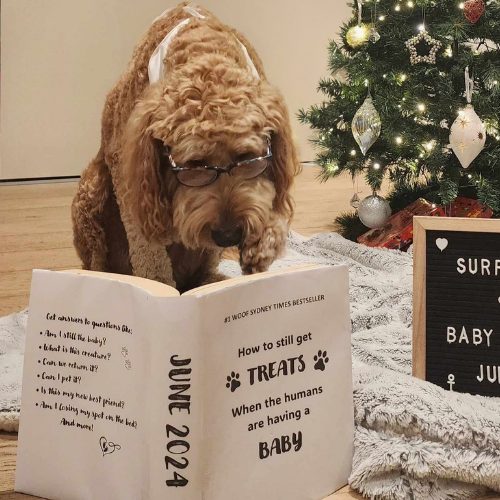
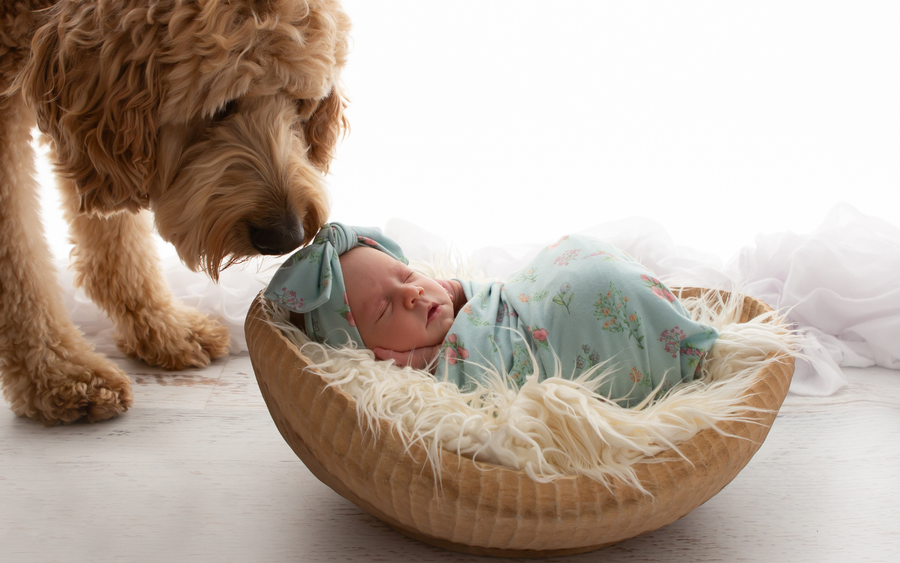
When I found out I was pregnant with Joy, the excitement came with a question I was not expecting to feel so strongly:
What about Buddy?
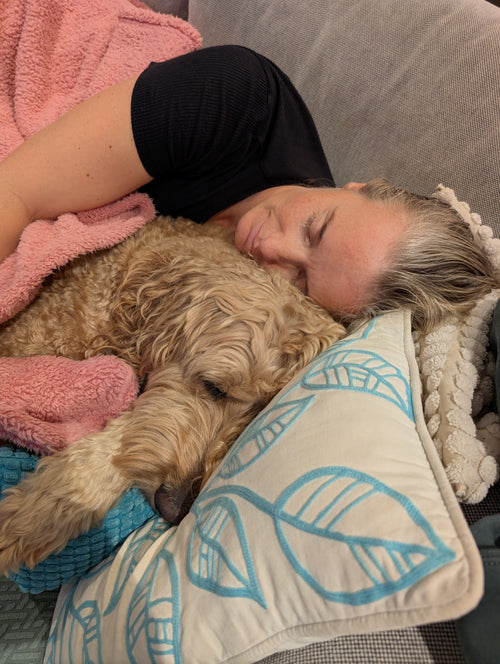
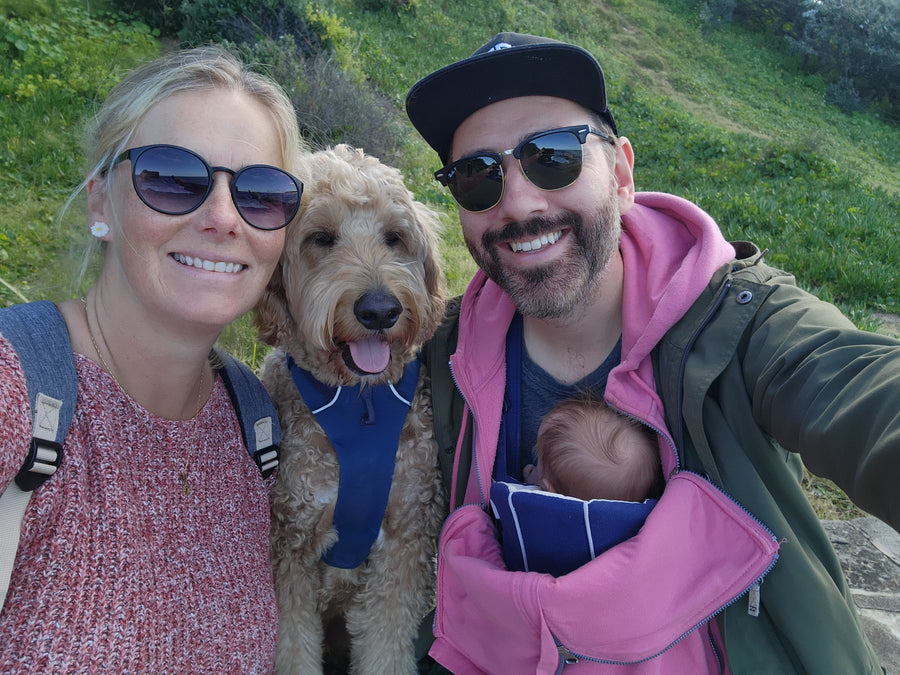
He had been my shadow for years. My walking buddy. My oversized cuddle bear. My first baby, in so many ways.
I worried Buddy would feel pushed aside. Would he think we had replaced him? Would the bond we had built long before Joy arrived quietly change into something neither of us recognised?
Looking back, I was worrying about the wrong thing.
The biggest challenge was not whether Buddy would love Joy. It was helping him make sense of a home that would suddenly look, sound, smell and operate completely differently.
“Preparing your dog for a baby is not really about creating the perfect first meeting. It is about making the hundreds of smaller changes feel less sudden.”
A moment I wish I captured
The First Time Buddy Felt Joy Kick
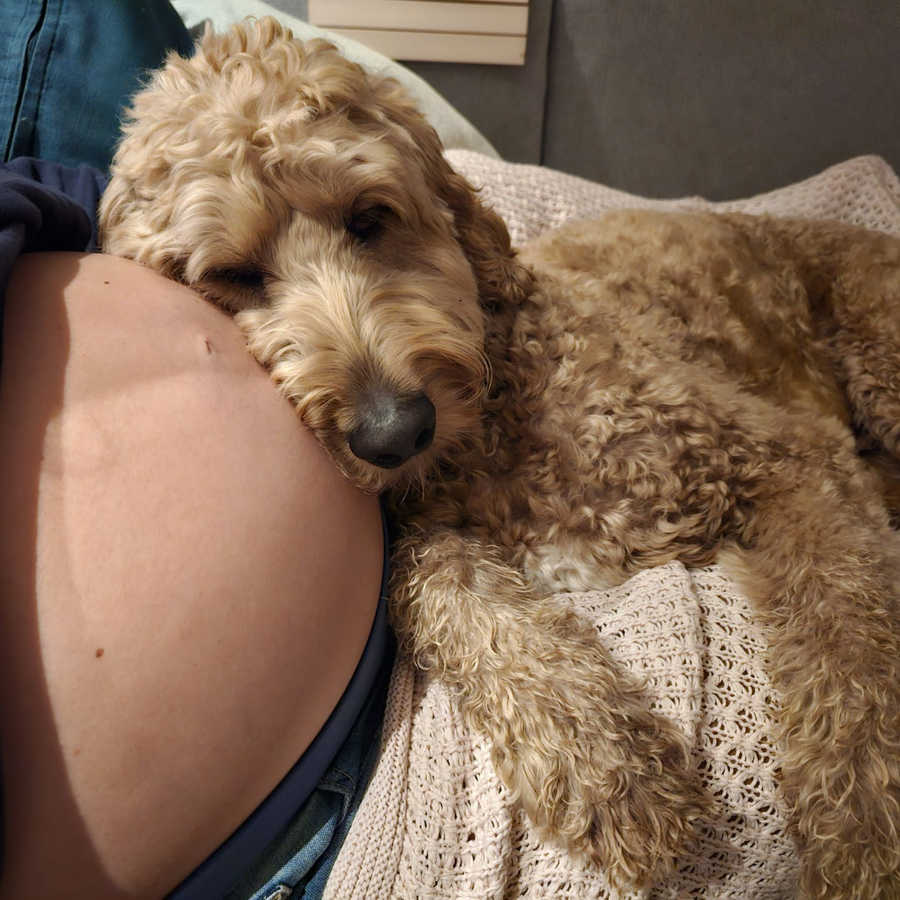
Buddy started resting his head beside my bump more and more as the pregnancy progressed.
Then one day, while he was lying there, Joy kicked. He felt it.
I wish I had managed to take a photo of the look he gave me. There was wonder, surprise and what looked like a little bit of worry all over his face at once.
He looked at my belly, then back at me, as though he was trying to work out what on earth had just moved underneath him.
I sat completely still because I did not want to break the moment. Buddy kept watching my bump, almost waiting for it to happen again.
To me, it felt like the first tiny introduction between them.
During Pregnancy
Start early, build gradually and make the coming changes feel less sudden.
01
Start as early as you can
Skills to Start Before Baby Arrives
You do not need a perfectly trained dog before your baby arrives.
But a few practical skills can make everyday family life much easier once your hands are full, your attention is divided and the pram becomes part of almost every outing.
The aim is not perfection.
It is to give your dog a clearer idea of what to do in the moments that are most likely to become stressful.
How to Make These Skills Work in Real Life
Teaching a cue in your living room is only the beginning.
Your dog also needs to practise it around movement, noise, new places and all the distractions that arrive with a baby.
A useful way to build any skill is through the Four Ds:
1DistanceHow far away you are from your dog.
2DurationHow long they can hold the behaviour.
3DistractionWhat else is competing for their attention.
4Diversity or difficultyPractising in new places and situations.
Increase only one challenge at a time.
Do not ask for a longer stay, from further away, beside a moving pram, in a busy park, all in the same attempt.
When your dog struggles, make the exercise easier: reduce the distance, shorten the duration, or remove some of the distraction.
The goal is not to test whether your dog will fail. It is to build enough successful repetitions that the skill becomes useful in real family life. The American Veterinary Society of Animal Behavior supports reward-based approaches like this for building new skills.
1
Come Back When Called
Recall becomes far more important when you are also managing a pram. You cannot safely chase your dog while pushing a newborn. Teach your dog to return promptly and come into a predictable position beside you, away from the pram wheels.
Start inside with very few distractions. Say your dog’s name, give the recall cue once and reward generously when they reach you.
Gradually increase the distance before adding distractions.
Introduce the stationary pram, then practise while another adult moves it slowly.
Outdoors, use a long line attached to a harness while recall is still developing.
Teach your dog to finish beside you or touch your open hand so they return to a safe, predictable position.
Never attach the lead to the pram.
When practising with a pram and long line, begin with another adult helping. Managing both at once can be difficult while the skill is still new.
Family-life goal: Your dog can return to you and move safely beside the pram when you need to regain control.
2
Leave Baby Food and Toys Alone
A baby brings dropped food, wipes, rattles, socks and soft toys that may look almost identical to your dog’s belongings. “Leave it” teaches your dog to turn away before picking something up.
Begin with a low-value treat inside your closed hand.
Say “Leave it” once and wait.
The moment your dog moves their nose away, mark and reward from your other hand.
Progress to a covered item on the floor.
Gradually practise with baby toys, dropped food and other real-life temptations.
Keep baby toys and dog toys stored separately.
Do not give old baby toys to your dog, as this makes the distinction less clear.
“Leave it” means do not take it. “Drop” means release something already in the mouth.
If your dog already has an item, trade rather than chasing or grabbing it.
Family-life goal: Your dog can turn away from baby belongings or dropped food and choose an appropriate alternative.
3
Go to Your Place and Settle
A place cue gives your dog a predictable spot during feeds, nappy changes, visitor arrivals and floor play. The aim is not to push them away. It is to help them remain included without being in the middle of every activity.
Choose a bed or mat outside the baby’s immediate activity area, but somewhere your dog can still see you.
Reward your dog for stepping onto it.
Add the cue once they are moving there reliably.
Begin rewarding calm settling, not only arriving.
Gradually build duration and introduce gentle movement, pram sounds or baby items.
Keep the bed positive.
It should not become somewhere your dog is sent only when they are inconvenient.
A place cue is not a physical safety barrier.
Use a baby gate, playpen, closed door or separate room whenever active supervision is not possible.
Family-life goal: Your dog can settle comfortably nearby while you care for the baby.
4
Pause During Busy Transitions
Sit and stay can help while you open a gate, move the pram through a doorway, clip on the lead or carry the baby safely past. It is useful for short transitions, but it should never replace physical separation.
Ask your dog to sit and stay.
Take one small step backwards, then return and reward.
Gradually increase either distance or duration, but not both together.
Practise while you sit down, kneel or move gently around the room.
Add baby equipment and household activity only once the basic stay is reliable.
Always use a clear release cue.
Do not require your dog to remain in a stay while a crawling child approaches them.
Stop and redirect the child, and allow the dog to move away.
Family-life goal: Your dog can wait briefly while you safely manage doors, equipment and movement around the home.
Training Does Not Need to Be Perfect
These skills do not need to be flawless before your baby arrives.
Even a basic version can make daily life easier.
Practise for a few minutes at a time.
Start somewhere quiet.
Reward generously and make the exercise easier whenever your dog becomes confused or overwhelmed.
Positive reinforcement goes a long way. Reward the good behaviour and try to ignore the bad.
For more complex behaviour, or if your dog shows fear, guarding, growling or snapping, speak with your veterinarian or a suitably qualified reward-based behaviour professional.
This is something we would have loved to spend more time on in hindsight. Buddy is the sweetest dog, but he does have a mind of his own, and recall and staying away still is not his best skillset. We ended up using a baby gate for tummy time, and although he could easily have jumped over it, he respected that boundary. So if it is not perfect, there are still other solutions. Dogs are dogs, not robots, so it is part of the chaos (for us, at least).
02
Make change feel gradual
Change the Routine Before the Baby Changes It for You
Dogs notice patterns. They know when you usually wake up, when the lead comes out and which particular sound means dinner is approximately three seconds late.
The goal is not to deliberately give your dog less love. It is to make their world more flexible before the baby arrives.
Blue Cross guidance recommends introducing likely household and routine changes gradually rather than changing everything the moment the baby comes home.
Before baby
Same walk time.
Same person handling the lead.
Predictable sleeping routine.
Immediate attention.
After baby may look like
Changing walk times.
Shared care.
Different sleeping arrangements.
Delayed attention.
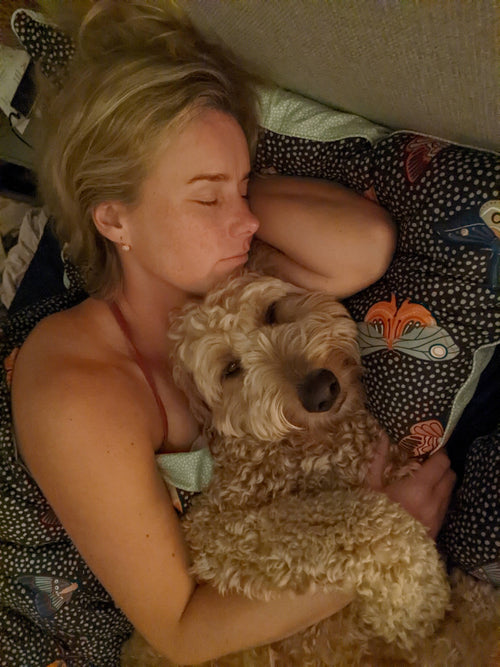
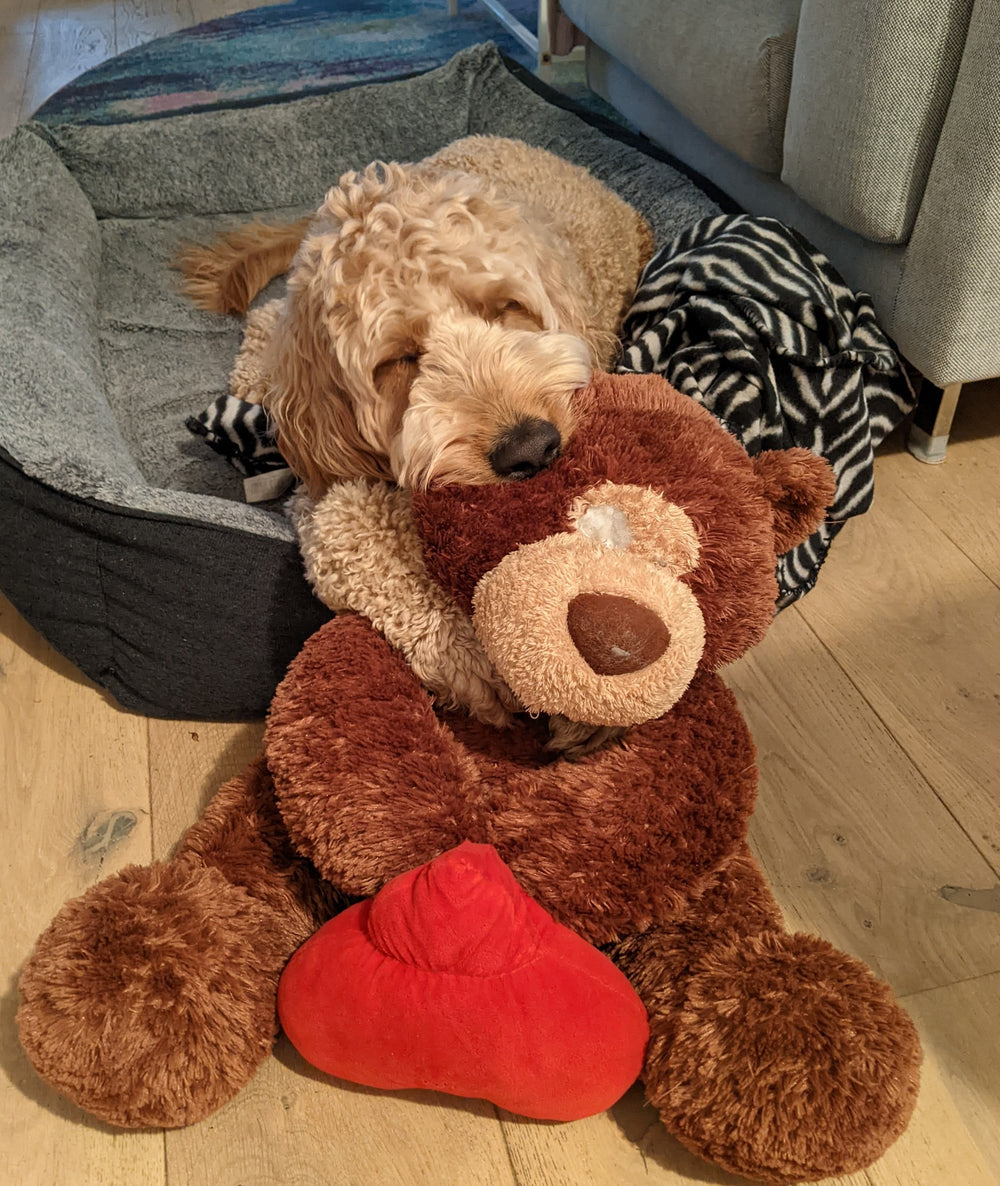
If your dog currently sleeps on the bed and you are planning for that to change once the baby arrives, it is worth starting that change now rather than waiting. Buddy still sleeps at my foot end. I would miss the cuddles too much if he did not. Many of our friends chose to stop this before their baby arrived, and neither approach is wrong, just manage the change before the baby arrives rather than after.
I could never give up spooning with my big teddy bear.Some cuddles are simply non-negotiable.
03
Prepare support early
Getting Help Is Not Letting Your Dog Down
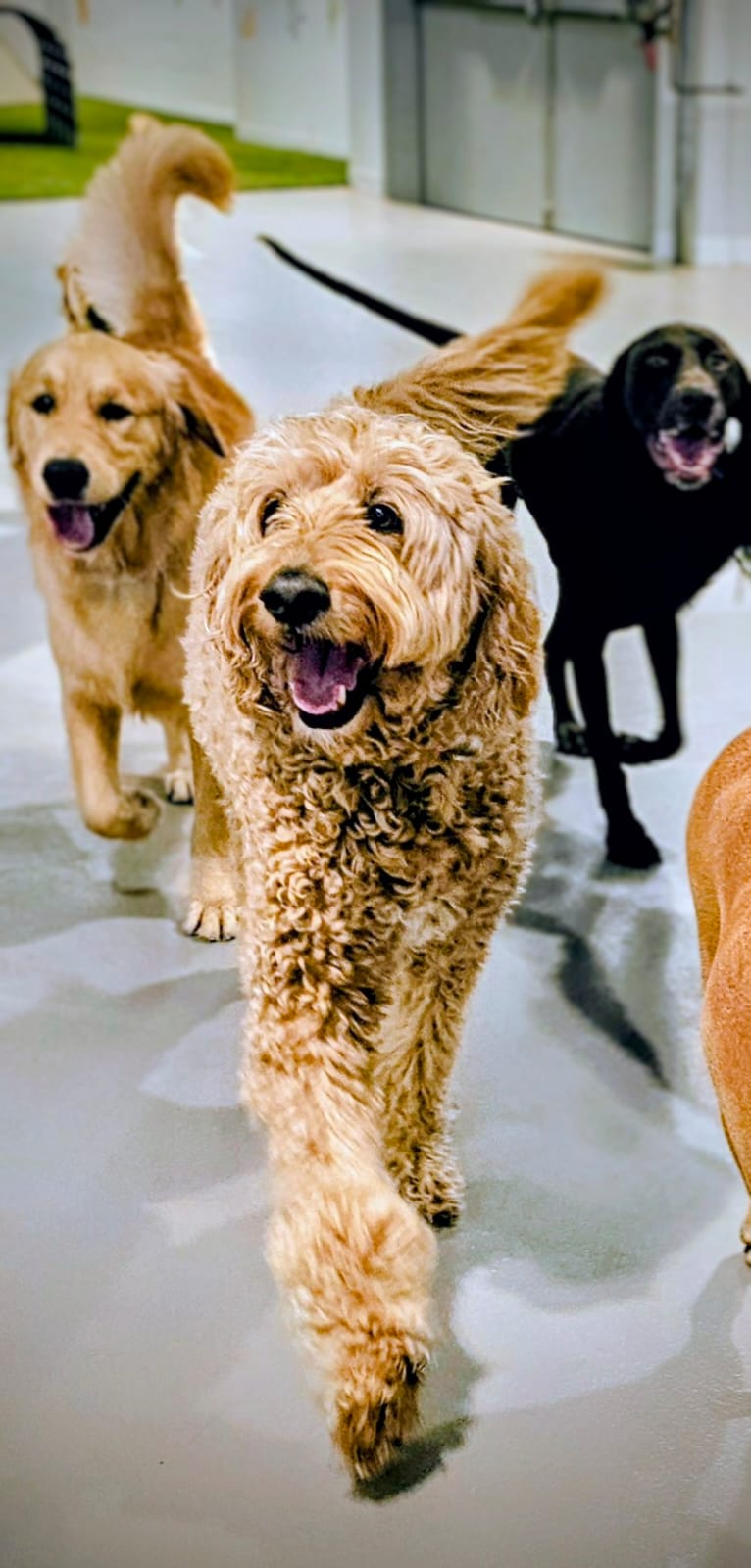
Buddy leading the pack at doggy daycare.
It is worth researching dog walkers, daycare, trusted family support or pet sitters while you still have the mental space to compare your options.
If it feels right, let your dog meet the person and try a few trial walks. Easing the new arrangement into ordinary life before your household turns upside down can make the transition gentler for everyone.
You do not have to prove your love by doing every part of family life alone.
Meeting the walker or carer ahead of time
A trial day of daycare before the birth
Jotting down routines and quirks for whoever steps in
Emergency contacts saved somewhere easy to find
04
Make new things feel ordinary
New Things Don't Need to Arrive All at Once
It is rarely just one new object. It is a cot, a change table, a pram, a rearranged room, new smells, new furniture and a nursery that did not exist a few months ago. To your dog, that is a lot of change landing in a home that used to feel predictable.
VCA guidance supports allowing a dog to investigate new baby furniture, blankets and equipment gradually, while building calm, positive associations rather than presenting it all at once.
Don't bring in everything at once. Stage it, let your dog get used to it, have a sniff and settle into the new normal before you add the next change.
Bring one new item into the room at a time, rather than redesigning it all in a day
Let your dog sniff and investigate the pram, cot and toys before they become off-limits
Reward calm curiosity, not just calm avoidance
Teach “leave it” before the floor fills up with tempting baby toys
Give your dog time to adjust to each new normal before introducing the next change
Buddy Already Shows Us What Change Feels Like. Every time we go on holidays and the suitcases come out, Buddy knows before we have said a word. His whole demeanour changes. He gets flat, he watches us pack, he knows he is not coming this time. In some ways, a nursery full of new things is similar. Dogs pick up on the signs of change before it fully arrives. Introducing new things slowly, and bringing him along for it rather than presenting it as a finished result, made the change feel far less sudden.
05
One of the biggest practical changes
Practise Walking Beside the Empty Pram
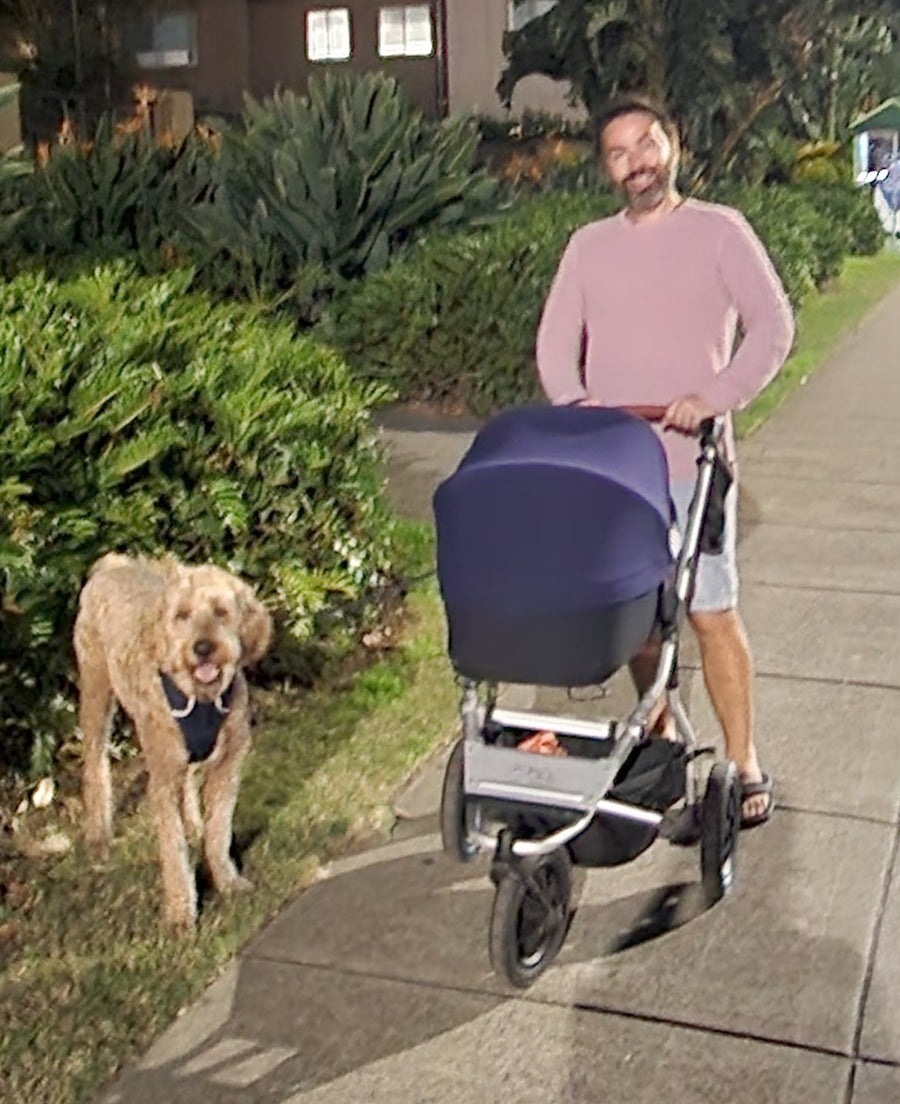
Practising With the Pram Before Joy Arrived. One of the strangest things we did during pregnancy was take Buddy for walks beside an empty pram. We felt completely ridiculous at first. To make it more realistic, we sometimes put a phone inside the pram playing baby crying sounds. That earned us some very confused looks. People would glance into the pram expecting to see a baby, only to find a mobile phone crying back at them. We must have looked slightly unhinged walking around the neighbourhood with an empty pram, a large dog and a fake baby crying from inside it. But as awkward as it felt, it gave Buddy the chance to experience the pram, the movement and the unfamiliar sounds before there was an actual newborn inside it.
What to Practise
Start somewhere quiet and familiar. Let your dog investigate the stationary pram first, then gradually practise:
Walking beside the wheels
Slowing down and stopping
Turning in both directions
Waiting at kerbs
Moving through narrower spaces
Responding to you while the pram is moving
Walking past mild distractions without crossing in front of the pram
Reward calm behaviour and keep enough space between your dog and the wheels. If your dog looks worried, increases their distance or struggles to focus, slow the process down and make the exercise easier.
By the time there is a real baby inside, the goal is for the pram to feel completely ordinary to your dog.
Scott and Buddy practising empty pram walks before Joy arrived.
Why We Took It Slowly With Buddy. As a puppy, Buddy once caught his paw in the spokes of a passing bike. He was not seriously injured, but it left him wary of wheels moving close beside him. That was why we wanted to introduce the pram slowly before Joy arrived. Our first priority was helping Buddy feel comfortable and trust that the pram was not something he needed to avoid.
Founder product story
Designed for Pram Walks
I was determined to keep taking Buddy with us on our walks once Joy arrived.
But I also wanted to feel safe and in control.
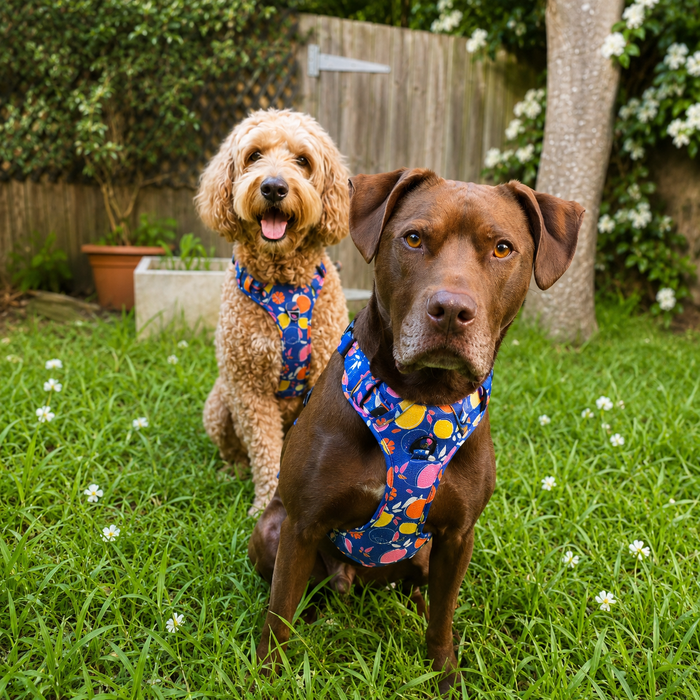
I was looking for a no-pull harness with a grab handle and a lead I could wear hands-free, so both hands could stay on the pram.
I could not find the right quality in a fun design that felt like us as a family.
So I designed them.
No-Pull Dog Harness
Front chest clip to help redirect pulling
Back clip for everyday walks
Reinforced grab handle for quick control
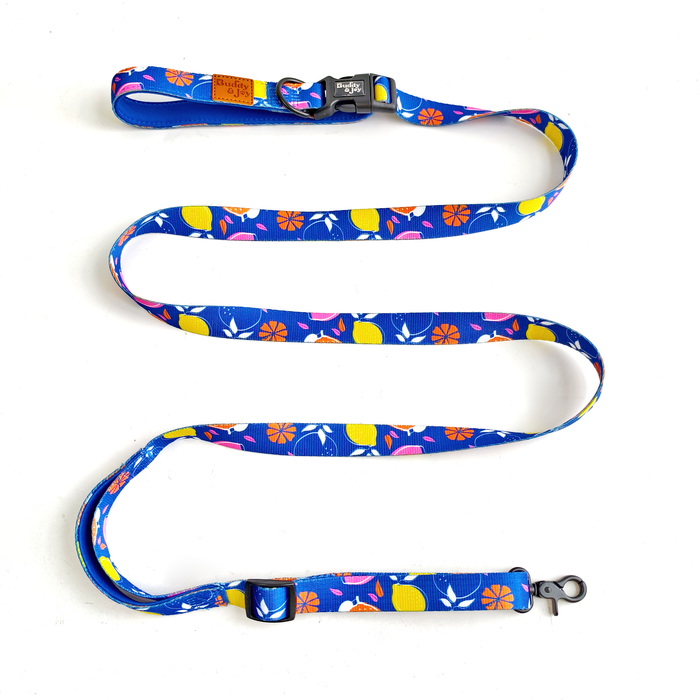
Multi-Wear Dog Lead
Hands-free wear around the waist or across the body
Babies bring crying, squealing, hiccups and sudden noises into the home.
Play baby sounds quietly before the birth while your dog is relaxed. Pair them with something positive, such as treats, calm praise or an enrichment activity.
Increase the volume gradually only if your dog remains comfortable.
The goal is not to test how much noise your dog will tolerate. It is to make the sounds feel less unfamiliar before they come from a real baby.
Practise Calm Greetings and Movement Around You
Your dog may be used to greeting you with full enthusiasm.
Jumping up. Following closely. Pushing in for attention. Trying to see what you are carrying.
That behaviour may have felt manageable before pregnancy. It can feel completely different when you are recovering from birth, carrying a newborn or trying to move carefully through the house.
Practise calm greetings before the baby arrives. Reward your dog for:
Keeping four paws on the floor
Waiting while you enter the room
Standing or sitting beside you instead of jumping
Giving you space when your arms are full
Moving away when asked
Settling while you sit down or stand up slowly
You can practise while carrying a doll, folded blanket or cushion so your dog becomes used to seeing something in your arms.
The aim is not to make your dog less excited to see you. It is to teach them a safer way to show that excitement when your body, balance and attention may be very different.
Create and Protect Their Own Retreat
Your dog also needs somewhere that still feels like theirs.
Choose a quiet bed, gated area or room where they can rest without being followed or disturbed.
Introduce this space before the baby arrives so it feels familiar and positive, not like somewhere they are suddenly sent once the baby comes home. Keep it:
Buddy has his own space too.
Comfortable
Easy for your dog to access
Away from busy walkways
Protected from future toddler access
Associated with calm, rest and good things
This retreat is not punishment. It gives your dog somewhere to decompress while the household changes around them.
You are not trying to recreate life with a newborn before the birth. You are simply helping your dog practise the sounds, boundaries and calmer behaviour that will make the transition less abrupt. Family Paws Parent Education offers further resources on preparing dogs and young children to safely share a home.
07
Sort practical jobs early
Book a Health and Behaviour Check
Pain can affect a dog's tolerance and behaviour. Use a vet visit to review both physical health and anything that has changed in how your dog responds. RSPCA Australia has further guidance on preparing dogs to safely share a home with a baby.
RSPCA Australia recommends regular veterinary care and individual advice about vaccinations and parasite prevention.
If you already know your dog has something more serious to work on, such as resource guarding, we highly recommend engaging an experienced, reward-based dog trainer.
Health
Review vaccinations, parasite prevention, dental care, nails and medication.
Behaviour
Discuss pain, stiffness, irritability, fear, guarding or any other meaningful change.
One final thought
Your Dog Does Not Need a Perfect Introduction
You are not trying to convince your dog that nothing will change. Everything will change.
You are showing them that even when family life looks different, they still have a safe and valued place inside it.
Because the goal was never to build a new family that left Buddy behind.
The Complete Dog + Baby Preparation Checklist
Save the full three-stage journey and work through it gradually, without trying to remember everything at once.
This guide is written by Marieke, founder of Buddy & Joy, and is based on our own experience with Buddy and Joy alongside general educational guidance from recognised animal-welfare, veterinary and dog-and-baby education resources. Every dog and family is different. Speak with your vet or a suitably qualified reward-based behaviour professional for advice about your individual circumstances.